
Global annual solar installations are expected to decline in 2026 for the first time since 2018, following record growth in 2025, according to London-based research firm GlobalData. The slowdown is mainly attributed to China’s market reforms, policy changes in the United States, and slower growth in Pakistan.
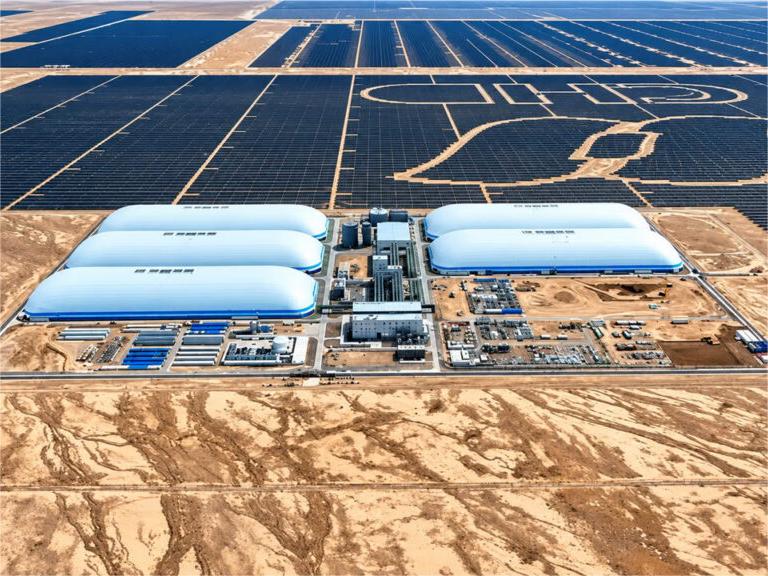
GlobalData forecasts that annual solar installations will fall in 2026 after increasing by 17.5% in 2025, reaching a new record high. China is expected to account for most of the decline as it shifts towards market-based electricity pricing.
“The decline in 2026 reflects policy changes in a few major markets rather than weakening fundamentals for solar power, with China’s shift to market-based electricity pricing accounting for most of the reduction,” said Attaurrahman Ojindaram Saibasan, a power analyst at GlobalData.
Despite the short-term slowdown, the long-term outlook remains positive. GlobalData expects global cumulative solar capacity to grow at a compound annual growth rate (CAGR) of 12.5% between 2025 and 2035, more than doubling solar’s share of global electricity generation.
China accounted for more than half of new solar installations in 2025, followed by the United States and India. India recorded 87.2% growth in new installations, while Pakistan saw an increase of 34.3%, supported by rising rooftop and off-grid demand, making it the world’s fourth-largest solar market. Meanwhile, installations in the Middle East and Africa nearly tripled, Europe grew by 2.6%, and North America declined by 3.6%.
The report also highlights changes in solar module pricing. After years of steady declines, module prices have recently stabilized and even increased due to higher silver and solar cell costs, China’s April adjustment to export tax rebates, and Beijing’s efforts to curb excessive price competition.
Grid constraints are emerging as another major challenge for solar expansion. GlobalData points to curtailment in China, negative electricity prices in Europe, and grid connection queues in the United States, India, and Brazil.
Saibasan noted that declining battery costs could help address grid congestion, curtailment, and negative electricity prices. In regions with strong solar resources, combining solar power with energy storage is becoming increasingly competitive, allowing solar projects to supply electricity beyond daylight hours.
Developers and investors that integrate energy storage into solar projects and secure grid connections early are expected to be better positioned to benefit from a recovery starting in 2027, according to GlobalData.
The latest forecast follows GlobalData’s projection in March that global cumulative solar capacity would reach 6 TW by 2031. Separately, the International Energy Agency’s Photovoltaic Power Systems Programme estimated that global solar additions reached 690 GW in 2025. In October, the IEA also forecast an 11% decline in global renewable capacity additions in 2026, largely driven by slower solar deployment in China.

وهي حاليًا واحدة من أكبر مصدري منتجات الطاقة الشمسية الكهروضوئية في الصين.
 دعم شبكة IPv6
 بالعربية